



Cotton Production in Azerbaijan – The History, Present, and Future of the “White Gold”
Historical development
Cotton production in Azerbaijan has been one of the leading sectors of agriculture for centuries. In the early 19th century, large-scale cotton cultivation was carried out in Ganja, Goychay, Agdash, and Nakhchivan, while the Mil-Karabakh, Mughan-Salyan, and Shirvan regions became the main production zones for cotton farming.
The “Qaraqoza” variety was mainly cultivated at that time. Although its fibers were short and coarse, it met domestic demand of the period. After Azerbaijan became part of the Russian Empire, the cotton industry entered a new stage — cotton-ginning factories were established, and machinery powered by steam and oil engines was introduced.
By 1912, more than 50 cotton-ginning facilities were operating in the Yelizavetpol and Baku provinces. A significant portion of the cotton was exported to factories in Moscow, Poland, and Riga. The textile factories of the “Aliyev Brothers,” “Mughan,” “Caspian Manufacturing Company,” and H.Z. Taghiyev transformed Azerbaijan’s cotton industry into one of the major production centers in the Caucasus.
Between 1907 and 1911, the construction of irrigation canals in the Mughan and Mil plains made it possible to irrigate 50,000 desyatins of land. This step had a significant impact on increasing productivity in cotton farming.

Soviet period and post-independence
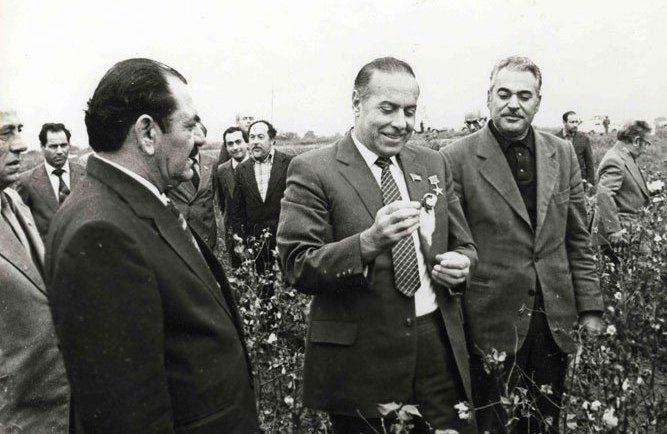
During the Soviet period, cotton production in Azerbaijan was regarded as“white gold.”Between 1979 and 1981, yields exceeded 30 centners per hectare, and in 1981, a record level was achieved with the procurement of 1 million tons of cotton .
In the years of independence, the development of the sector followed a fluctuating trend. Due to the economic difficulties of the 1990s and changing priorities in the 2000s, cotton production declined sharply. In 2015, cotton was planted on only 18,000 hectares, and 35,000 tons of cotton were harvested.
However, with government support and new subsidy programs, cotton production entered a period of revival starting in 2016.
Strategic importance
Cotton production holds strategic importance in Azerbaijan in several key areas:
Economic aspect:Cotton serves as a fundamental raw material for the local textile and light industry sectors, and, due to its export potential, it generates foreign currency revenue.
Social aspect:It expands employment opportunities for tens of thousands of rural residents and contributes to the socio-economic development of the regions.
Environmental and agricultural aspect:It plays an important role in crop rotation, helping to maintain soil fertility.
Industrial connections:The cotton sector is directly linked with the textile industry, oil production, seed processing, and other industrial fields, playing an integrating role across the value chain.
The Government of Azerbaijan has declared the development of cotton farming as one of its priority sectors and has strengthened support for the industry through special programs and subsidies. As a result of the efforts of APIA and partner organizations, significant steps have been taken toward modernizing the cotton sector, implementing technological innovations, and promoting sustainability principles.

Statistical indicators (2000–2024)