



Cotton sector
- Cotton Cultivation
- Farmer and Farm Model
- Cotton Growing Regions
- Cotton processing
- Cultivation information
- Cultivation fields
- Yield trends
- Export destinations
- Value chain
- Traceability
- Cotton varieties
- Market access
Cotton Cultivation
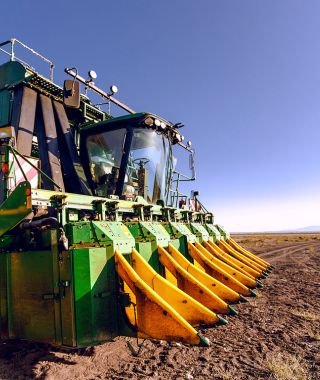
Cotton is a strategic agricultural crop in Azerbaijan and is mainly cultivated in the Aran–Karabakh plains. The climate is semi-desert, with hot and dry summers and mild winters. Since the majority of rainfall falls outside the vegetation period, about 90% of cotton fields rely on irrigation. Most field operations are mechanized: 90–95% of processes such as soil preparation, sowing, spraying, and harvesting are carried out mechanically. This allows both reducing costs and maintaining stable product quality.

Climate and Soil Requirements
For optimal development, cotton requires a long and sunny growing season, an accumulated active temperature of 2200–2800°C, and a low-humidity environment. The most suitable soil types are clay-loam sandy profiles and structured chernozem soils. Autumn plowing, spring loosening, and field leveling help minimize water losses. As stated in guideline AGR-01-012, soil pH should be maintained between 6.0 and 7.5.
Sowing, Variety Selection, and Fertilization
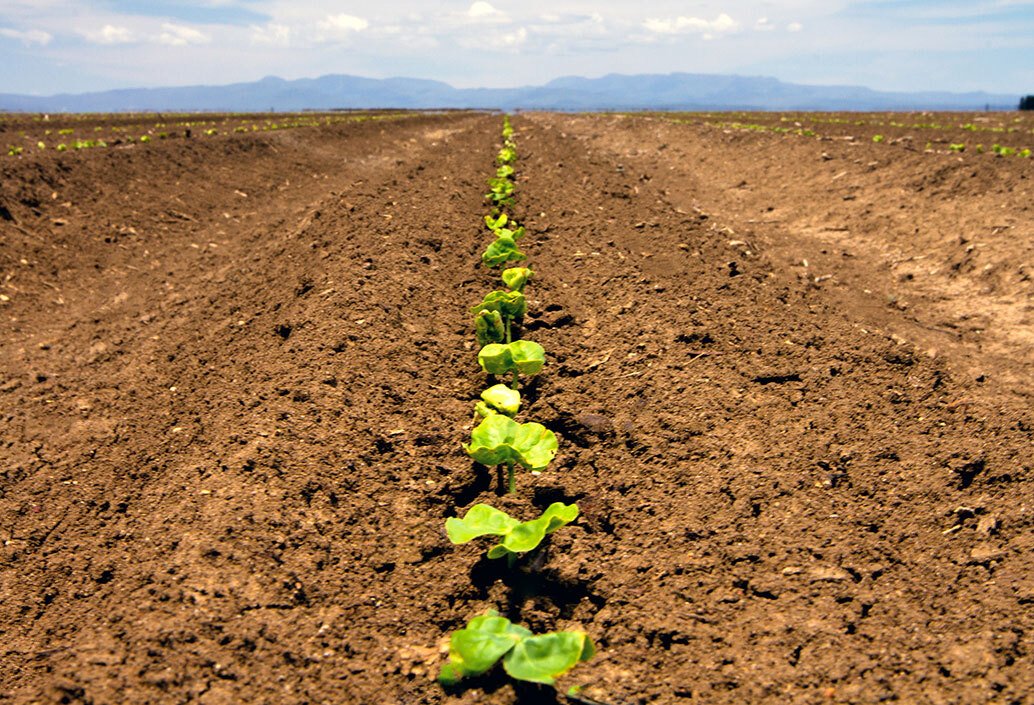
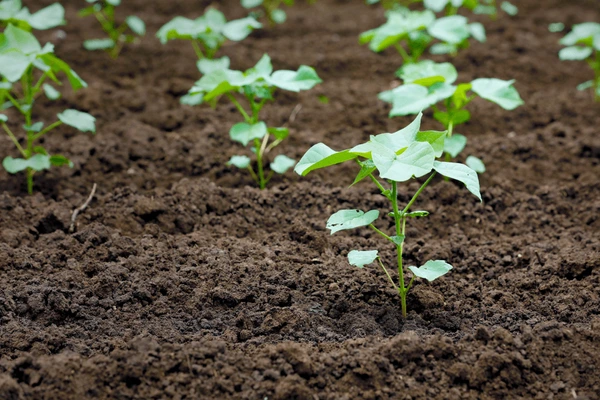
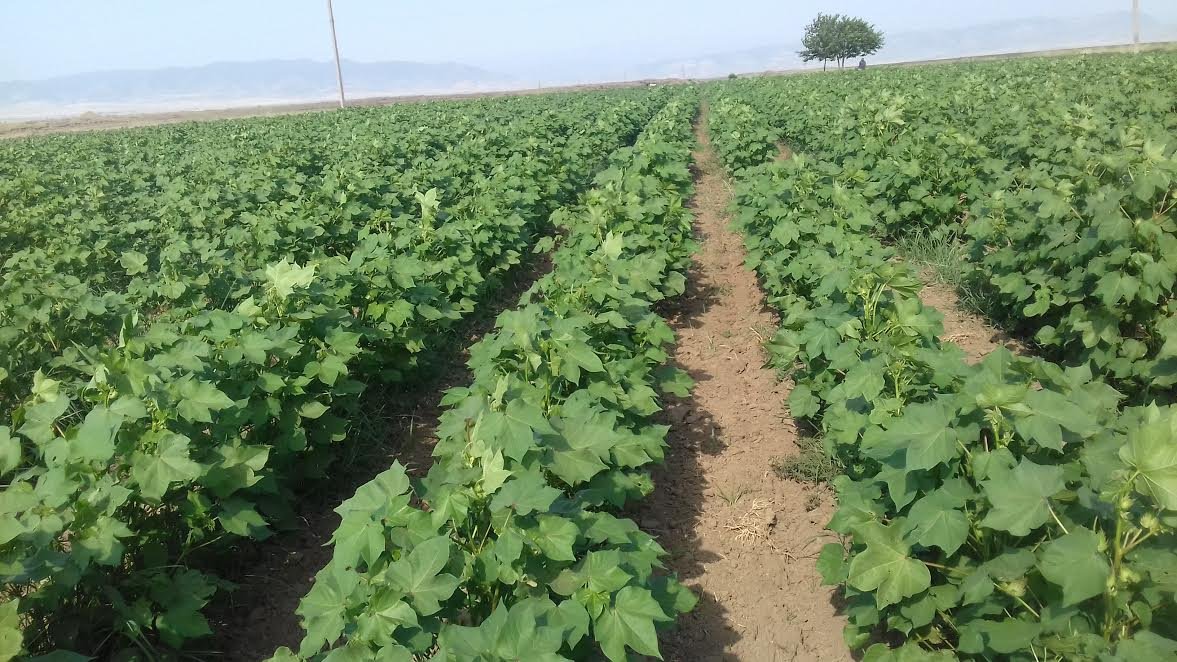
Sowing is usually carried out in the second half of April to early May. The optimal depth is 4–6 cm, although some guidelines (AGR-01-013) recommend 2.5–4 cm. The use of certified seeds ensures uniform emergence and improved fiber quality. In Azerbaijan, the most widespread varieties are BA-1010, Lazer, Fiona, Delta-21, Turan-1, and Ganja-110; the use of GMO seeds is prohibited. During fertilization, the N:P:K ratio should be maintained at 1:0.5:0.6, and nitrogen fertilizers should be applied fractionally due to the risk of leaching. Additional foliar fertilization with micronutrients (Zn, B) is also beneficial based on leaf analysis.

Irrigation Strategy and Efficiency
On average, 5–6 irrigations are carried out during the vegetation period (AGR-01-009). The main stages are germination, flowering, boll filling, and maturation. The first irrigation usually takes place in early June, while the last one is in early September. To reduce water losses in canals, field leveling, in-field valves, and the use of drip/pivot irrigation systems are recommended.
Pests and IPM
The main pests include cotton bollworm, aphids, thrips, spider mites, and whiteflies (AGR-01-014). The Integrated Pest Management (IPM) system involves field monitoring, pheromone traps, biological control agents, and the rotation of modes of action. Pesticides should only be applied according to the registered lists and in strict compliance with the label instructions.
Mechanization and Productivity Indicators
Mechanization not only reduces labor intensity but also improves technological discipline—ensuring uniform sowing, precise spraying, and damage-free harvesting. According to statistics, while the average yield was 2.63 t/ha in 2021, it increased to 3.03 t/ha in 2024 (≈15% growth). This trend is closely linked to seed quality, access to irrigation, and adherence to agronomic practices.